
In the teachings of mindfulness meditations, the mind (or more precisely, the awareness) is often described as a vast, calm sea. Sometimes teachers will also use a metaphor or a lake or a sky. In meditation, as we focus on our breath, sensations in the body or other experiences happening in the present, we can eventually reach the state where we are aware of that infinite quality of our mind to stay peaceful and calm. All experiences, emotions, sensations, thoughts – all of it, become the transient waves, winds and clouds, simply passing through that vast area of the sea-like awareness.
Noticing this duality of our state – the one where we are driven by the turbulent waves, high winds, and often dark clouds; the other where we can peacefully abide in the calm expanse of the awareness itself – can be both very freeing and very useful. We free ourselves from our attachment to a temporary sensations, emotions, and thoughts – which often can wreak havoc in our lives. As we free ourselves, rather than simply react, we can respond to these temporary situations in a skilful way, which makes it very useful.
I have found mindfulness tools to be particularly useful in coaching others to find trust in themselves, rather than looking for an answer in the societal and cultural norms of beauty, performance, and meritocracy. Typically, once a person can comfortably stay and just be with their own body sensations, emotions, and thoughts, they quickly discover layers of the false beliefs they internalized. This realization is usually necessary to subsequently uncover true personal values, and to develop helpful beliefs and habits.
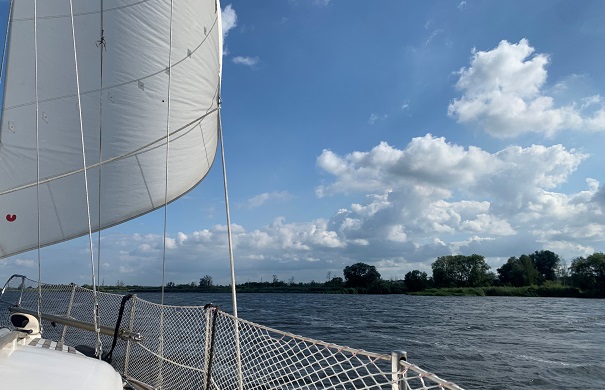
Going back to the sea metaphor which I am very fond of because of my love of sailing. The purpose of mindfulness (formal or informal) is not to get the sea to be completely calm all the time. Calm sea means no waves, but it also means no winds, and that means very bad news when sailing. Yes, it’s nice and relaxing to just float on the water, sunbathing or fishing for a while. But it gets us nowhere!
The purpose of mindfulness is to remember about our mind’s ability to stay calm while the waves come and go, even during a particularly stormy weather. The purpose is to learn to read the weather of our minds, so that we can put the correct sails up and go in the best direction that the winds allow. If we don’t notice where the waves and winds are taking us, on the other hand, we may end up somewhere miserable. All it takes is practice – one cannot simply understand the theory behind this, one must simply practice.
Mindfulness and meditation are quite popular these days, but I hear too many people claiming they are unable to meditate. That’s one false belief that everyone should get rid of right away! We all can meditate. The calm state of the mind is actually very natural to us – we just often achieve it in the not-so helpful ways. Have you ever been in a state of flow? Have you lost track of time doing an activity? Have you enjoyed any artistic activity like painting, singing, dancing? Have you felt entirely focused on your breath and movement during your run, yoga class or while swimming? If you responded “yes”, it is very likely you have been mindful – focused on one activity at the time and fully present.
The difficulty with meditation, at least in the beginning, is that we are not used to focusing our minds on ourselves. When we follow our breath or sensations in the body, we often get either bored or disturbed (the latter can often indicate trauma of some kind). When we recognize strong emotions or disturbing thoughts, we avoid them and push them away. All these reactions are completely normal, but they do tend to stop us from meditating. We keep being driven by underwater currents of our minds, until we reach some breaking point, where we realize we cannot continue along that path.
So, what should a beginner do?
No one usually starts sailing alone. Even if you study the navigation theory, look at pictures of knots and learn all the parts of the sailboat, you are not ready to sail it. You need to take that first voyage with another experienced sailor. You need to try it out in a safe and welcoming environment, preferably with other beginners like you. You need to make mistakes and get your hands dirty tying those knots and putting up sails. You need to ask questions and hear experienced sailor’s advice. Once you get a hang of it, you can join a sailing crew, take some sailing exams, and get your certificates. You may never be able to sail that boat across the ocean completely alone, and that’s totally fine. You still have become an experienced sailor!
Similarly in mindfulness meditation, starting alone is going to be extremely difficult and discouraging. It is best to join a meditation class or meditate with others. There are so many options available now, both for in-person and online meditations. I have completed and can wholeheartedly recommend this online course for example, mainly because of frequent group mentor calls being offered. Either way, simply find a class that suits you, and if it does not meet your needs, pick another, until you find the one that resonates with you. Don’t hesitate to ask questions and share your experiences with teachers and other students or group members. You will often find that everyone experiences similar “issues”, and you will often get helpful advice. With time you might discover that you can actually be mindful and even meditate alone. Regardless, you start getting the benefits of mindfulness the moment you first stop, sit and notice.
 AGGA Coaching
Leave a comment